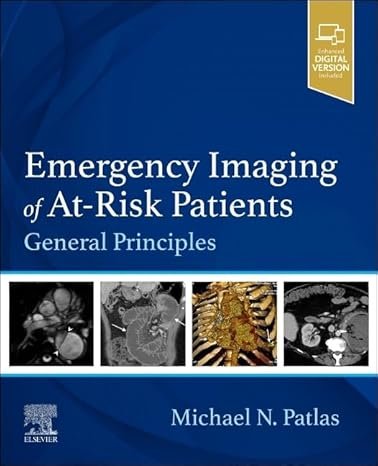

Emergency Imaging of At-Risk Patients: General Principles PDF – Essential Guide for Clinicians
Emergency Imaging of At-Risk Patients: General Principles PDF is a practical and comprehensive reference designed to support clinicians in making rapid, accurate diagnostic decisions for patients at increased risk of complications. Written by leading experts in emergency medicine and radiology, this book provides a clear framework for selecting appropriate imaging modalities, interpreting findings, and managing complex cases efficiently. Its structured format makes it an indispensable tool for emergency physicians, radiologists, intensivists, and trauma specialists.
Why This Book Matters
In emergency settings, timely and precise imaging can be the difference between life and death, especially for high-risk patients such as those with comorbidities, immunosuppression, or trauma. This book provides evidence-based guidance to optimize imaging choices, reduce delays in diagnosis, and improve patient outcomes. By offering structured algorithms and key decision-making criteria, it helps clinicians manage critical scenarios with confidence and accuracy.
For additional authoritative guidelines, consult the American College of Radiology (ACR) and the Radiological Society of North America (RSNA).
Key Features of the Ebook
This essential reference includes:
-
Comprehensive imaging principles for critically ill and at-risk patients
-
Evidence-based protocols for CT, MRI, and ultrasound in emergency care
-
Practical diagnostic algorithms for rapid decision-making
-
Guidelines for trauma imaging and critical care assessment
-
Pearls and pitfalls in emergency radiology
-
Pediatric and geriatric imaging considerations
-
Updated content aligned with current clinical standards
For more specialized references, visit European Society of Radiology (ESR) and American College of Emergency Physicians (ACEP).
Who Can Benefit
This book is particularly valuable for:
-
Emergency physicians and radiologists
-
Critical care and trauma specialists
-
Residents and medical students in emergency medicine
-
Radiology technologists and imaging professionals
-
Clinicians managing complex or unstable patients
For complementary reading, explore Fundamentals of Emergency Radiology and Emergency Radiology: Imaging and Intervention.
Learning and Application Strategies
The book emphasizes practical, real-world application. Through structured protocols, diagnostic checklists, and clinical algorithms, it ensures rapid access to essential information during emergencies. Clinicians can apply these principles directly at the bedside or in trauma bays, improving diagnostic accuracy and response time in critical scenarios.
For further education, consult the Society for Academic Emergency Medicine (SAEM) and the Radiology Society of North America (RSNA).
Detailed Content Overview
Chapters are organized to cover:
-
Core principles of emergency imaging
-
Protocols for trauma and high-risk patient evaluation
-
Imaging strategies for cardiovascular, neurological, and abdominal emergencies
-
Pediatric and geriatric imaging approaches
-
Pearls and pitfalls in critical care radiology
-
Evidence-based algorithms for clinical decision-making
-
Essential charts and quick-reference tools
Conclusion
Emergency Imaging of At-Risk Patients: General Principles PDF stands out as a practical, concise, and authoritative resource for healthcare professionals dealing with critically ill and high-risk patients. By combining evidence-based protocols with rapid diagnostic strategies, it empowers clinicians to make confident, timely imaging decisions in emergency care settings.
👉 Download Emergency Imaging of At-Risk Patients: General Principles PDF to enhance your emergency and critical care practice. For more resources, visit FreeMedBooks.com and Amazon.